
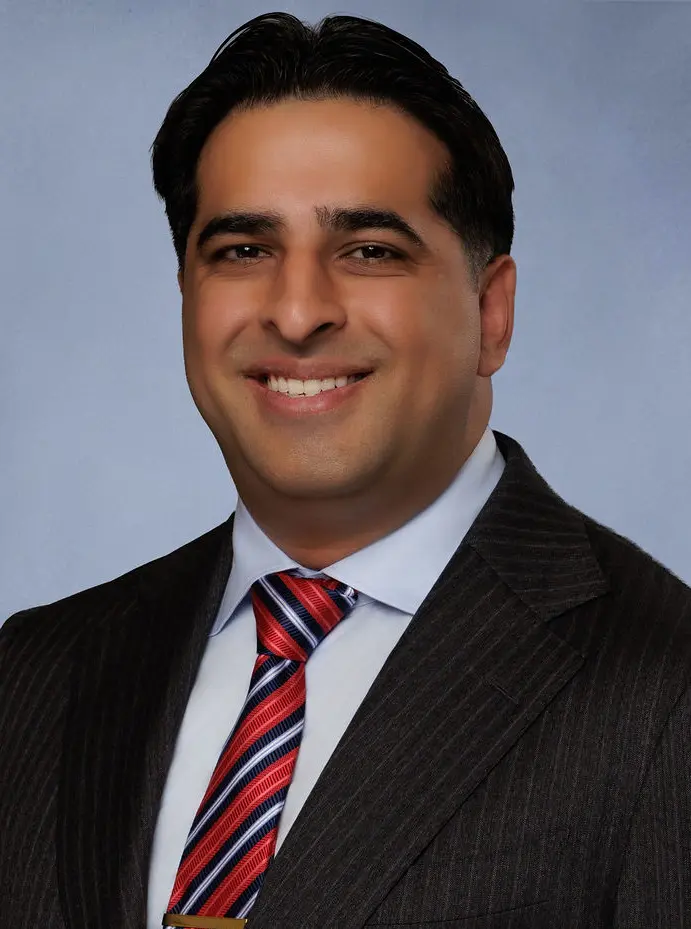
Amir I. Khan, M.D.
Dr. Amir I. Khan graduated cum laude from Dartmouth College with a Bachelor of Arts in Neuroscience, before earning his medical degree at Emory University School of Medicine in Atlanta, GA. He then completed his urology residency at Yale University in New Haven, CT, followed by a two-year fellowship in Endourology & Minimally Invasive Surgery at Vanderbilt University Medical Center in Nashville, TN.
Dr. Khan specializes in minimally invasive endoscopic and robotic surgical techniques. His clinical interests include the treatment of benign prostatic hyperplasia (BPH), with expertise in holmium laser enucleation of prostate (HoLEP), as well as complex kidney stone disease, ureteropelvic junction (UPJ) obstruction, ureteral stricture disease, and urologic malignancies, including kidney, upper tract urothelial, and prostate cancers. He is trained in all aspects of general urology and cares for patients with erectile dysfunction, urinary incontinence, overactive bladder, recurrent urinary tract infections, low testosterone, and male infertility.
Dr. Khan performs surgery at Baylor Scott & White Medical Center Frisco at PGA Parkway. Originally from Memphis, TN, he now lives in Frisco with his wife, a speech-language pathologist, and their three cats and a dog. Dr. Khan is fluent in Spanish, Hindi/Urdu (हिन्दी/اردو), and Punjabi (ਪੰਜਾਬੀ/پنجابی). Outside of medicine, he enjoys mixed martial arts and Formula 1 racing. He is committed to delivering the highest standard of urologic care and approaches every patient with the same compassion he would offer a member of his own family.
Education:
- Dartmouth College, Hanover, NH, B.A., Neuroscience, cum laude, 2014
- Emory University School of Medicine, Atlanta, GA, M.D., 2019
- Yale University School of Medicine, New Haven, CT, Residency in Urology, 2024
- Vanderbilt University Medical Center, Nashville, TN, Fellowship in Endourology & Minimally Invasive Surgery, 2026
Licensure:
- Texas
Awards & Honors:
- Joseph B. Whitehead Surgery Scholarship Awardee, Emory University School of Medicine, 2019
- Southeastern Section of the American Urological Association Research Grant, 2016
- Howard Hughes Medical Institute Research Scholarship, 2012
Select Publications:
Maciolek KA, Khan, Amir I., Hsi RS, Kavoussi NL. Cornering the Challenge: Initial Clinical Experience with EndoTheia FlexStone Endoscopic Steerable Basket. Journal of Endourology. 2026 Feb. PMID: 41630171.
Khan, Amir I., Cortese BD, Cox LL, Maciolek KA, Kavoussi NL, Talwar R, Hsi RS. Projected Savings for Urolithiasis Medications Purchased Through the Mark Cuban Cost Plus Drug Company in Medicare. Urology Practice. 2025 Oct. PMID: 41128893.
Smani S, Khan, Amir I., Choksi AU, Press BH, Rahman SN, Hayden CS, Gardezi M, Jalfon M, Lee J, Sprenkle PC, Kellner D. Can Anatomical Measurements on Preoperative Pelvic MRI Predict Postoperative Urinary Incontinence after Holmium Laser Enucleation of the Prostate? Journal of Endourology. 2025 Jun. PMID: 40470526.
Khan, Amir I., Psutka SP, Patil DH, Hong G, Williams MA, Bilen MA, Sekhar A, Kissick HT, Narayan VM, Joshi SS, Ogan K, Master VA. Sarcopenia and Systemic Inflammation Are Associated with Decreased Survival After Cytoreductive Nephrectomy for Metastatic Renal Cell Carcinoma. Cancer. 2022 Mar. PMID: 35285950.
Syed J, Khan, Amir I., Ludvigson A, Goland-Van Ryn M, Motamedinia P. Toradol to Reduce Ureteroscopy Symptoms Trial (TRUST). Urology. 2022 Mar. PMID: 3531484.
Khan, Amir I., Lindelof JC, Honig SC. The Impact of Erectile Dysfunction on Infertility and its Treatment. In: Bergman K, Petok W, eds. Psychological and Medical Perspectives on Fertility Care and Sexual Health. Elsevier; 2021.
Jansen CS, Prokhnevska N, Master VA, Sanda MG, Carlisle JW, Bilen MA, Cardenas M, Wilkinson S, Lake R, Sowalsky AG, Valanparambil RM, Hudson WH, McGuire D, Melnick K, Khan, Amir I., et al. An Intra-Tumoral Niche Maintains and Differentiates Stem-Like CD8 T Cells. Nature. 2019 Dec. PMID: 31827286.
Khan, Amir I., Reiter DA, Sekhar A, Sharma P, Safdar NM, Patil DH, Psutka SP, Small WC, Bilen MA, Ogan K, Master VA. MRI Quantitation of Abdominal Skeletal Muscle Correlates with CT-based Analysis: Implications for Sarcopenia Measurement. Applied Physiology, Nutrition, & Metabolism. 2019 Aug. PMID: 30615474.
Khan, Amir I., Patil DH, Kawwass JF, Zholudev V, Mehta A. Surgical Sterilization among U.S. Men and Women with Employer-Based Insurance: A Claims Data Analysis. Contraception. 2018 May. PMID: 29778585.
Select Presentations:
- “Bridging Holmium Laser Enucleation of the Prostate (HoLEP) and Robotic-Assisted Simple Prostatectomy (RASP): A Hybrid Approach for Management of the Very Large Prostate Gland.” Podium Presentation, North American Robotic Urology Symposium (NARUS), February 2026.
- “Projected Savings for Urolithiasis Medications Purchased via Mark Cuban Cost Plus Drug Company in Medicare.” Podium Presentation, American Urological Association Annual Meeting, April 2025.
- “Shared Eye Gaze Optical Tracking for Education and Guidance in Endoscopic Surgery.” Podium Presentation, American Urological Association Annual Meeting, April 2025.
- “Artificial Intelligence Prediction of Tumor Grade during Endoscopic Treatment of Upper Tract Urothelial Carcinoma: A Comparison with Experts.” Poster Presentation, American Urological Association Annual Meeting, April 2025.
- “Robotic Assisted Lysis of Adhesions for Patient with Urodynia Following Caesarean-Section.” Podium Presentation, North American Robotic Urology Symposium (NARUS), February 2024.
- “Is Ureteroscopy Using MOSES Laser Lithotripsy Comparable to Percutaneous Nephrolithotomy?” Poster Presentation, Northeastern Section AUA (NEAUA), October 2023.
- “Can Anatomical Measurements on Preoperative Pelvic MRI Predict Postoperative Urinary Incontinence After Holmium Laser Enucleation of the Prostate?” Poster Presentation, American Urological Association Annual Meeting, April 2023.
- “Intravesical Prostatic Protrusion Length is Associated with Postoperative Urinary Incontinence After Holmium Laser Enucleation of the Prostate.” Poster Presentation, World Congress of Endourology, October 2022.
- “High Preoperative Neutrophil-to-Lymphocyte Ratio Predicts Overall Survival in Localized and Metastatic Clear Cell Renal Cell Carcinoma.” Poster Presentation, American College of Surgeons Clinical Congress, October 2018.
- “Tumor-Infiltrating Lymphocytes are Immunologically Congruent and Independent of Prognostic Features in Renal Cell Carcinoma.” Poster Presentation, Genitourinary Cancers Symposium, February 2018.
Professional Memberships:
- Endourological Society, 2024–present
- American Urological Association, 2019–present
- American College of Physicians, 2017–present
- American Medical Association, 2014–present
- Benign prostatic hyperplasia (BPH) / enlarged prostate
- Urinary retention
- Kidney stone disease
- Hematuria (blood in urine)
- Hydronephrosis
- Ureteropelvic junction (UPJ) obstruction
- Ureteral stricture disease
- Kidney cancer
- Upper tract urothelial carcinoma (UTUC)
- Prostate cancer
- Bladder cancer
- Testicular cancer
- Urinary incontinence (male & female)
- Urethral stricture disease
- Overactive bladder (OAB)
- Erectile dysfunction (ED)
- Phimosis
- Scrotal conditions
- Low testosterone (hypogonadism)
- Recurrent urinary tract infections (UTIs)
- Male infertility
- Holmium laser enucleation of prostate (HoLEP)
- Aquablation
- UroLift
- GreenLight laser vaporization of prostate (PVP)
- Transurethral resection of prostate (TURP)
- Transurethral incision of prostate (TUIP)
- Rezūm
- Cystoscopy
- Ureteroscopy with laser lithotripsy
- Percutaneous nephrolithotomy (PCNL)
- Extracorporeal shockwave lithotripsy (ESWL)
- Cystolitholapaxy
- Robotic pyeloplasty
- Robotic ureteroplasty
- Robotic ureteral reimplant
- Robotic simple prostatectomy for BPH
- Robotic partial nephrectomy
- Robotic nephrectomy
- Robotic nephroureterectomy
- Robotic radical prostatectomy (RALP)
- Focal therapy for prostate cancer
- MRI fusion prostate biopsy
- SpaceOAR hydrogel
- Transurethral resection of bladder tumor (TURBT)
- Endoscopic treatment of upper tract urothelial carcinoma (UTUC)
- Suprapubic tube (SPT) placement
- Vasectomy
- Orchiectomy
- Hydrocelectomy
- Spermatocelectomy
- Varicocelectomy
- Xiaflex
- Circumcision
- Sacral neuromodulation
- Botox for overactive bladder
- Hydrodistention
- Bulkamid
- Direct vision internal urethrotomy (DVIU)
- Urethral dilation (Optilume)
- Penile prosthesis
- Urethral sling
Dr. Amir I. Khan graduated cum laude from Dartmouth College with a Bachelor of Arts in Neuroscience, before earning his medical degree at Emory University School of Medicine in Atlanta, GA. He then completed his urology residency at Yale University in New Haven, CT, followed by a two-year fellowship in Endourology & Minimally Invasive Surgery at Vanderbilt University Medical Center in Nashville, TN.
Dr. Khan specializes in minimally invasive endoscopic and robotic surgical techniques. His clinical interests include the treatment of benign prostatic hyperplasia (BPH), with expertise in holmium laser enucleation of prostate (HoLEP), as well as complex kidney stone disease, ureteropelvic junction (UPJ) obstruction, ureteral stricture disease, and urologic malignancies, including kidney, upper tract urothelial, and prostate cancers. He is trained in all aspects of general urology and cares for patients with erectile dysfunction, urinary incontinence, overactive bladder, recurrent urinary tract infections, low testosterone, and male infertility.
Dr. Khan performs surgery at Baylor Scott & White Medical Center Frisco at PGA Parkway. Originally from Memphis, TN, he now lives in Frisco with his wife, a speech-language pathologist, and their three cats and a dog. Dr. Khan is fluent in Spanish, Hindi/Urdu (हिन्दी/اردو), and Punjabi (ਪੰਜਾਬੀ/پنجابی). Outside of medicine, he enjoys mixed martial arts and Formula 1 racing. He is committed to delivering the highest standard of urologic care and approaches every patient with the same compassion he would offer a member of his own family.
Education:
- Dartmouth College, Hanover, NH, B.A., Neuroscience, cum laude, 2014
- Emory University School of Medicine, Atlanta, GA, M.D., 2019
- Yale University School of Medicine, New Haven, CT, Residency in Urology, 2024
- Vanderbilt University Medical Center, Nashville, TN, Fellowship in Endourology & Minimally Invasive Surgery, 2026
Licensure:
- Texas
Awards & Honors:
- Joseph B. Whitehead Surgery Scholarship Awardee, Emory University School of Medicine, 2019
- Southeastern Section of the American Urological Association Research Grant, 2016
- Howard Hughes Medical Institute Research Scholarship, 2012
Select Publications:
Maciolek KA, Khan, Amir I., Hsi RS, Kavoussi NL. Cornering the Challenge: Initial Clinical Experience with EndoTheia FlexStone Endoscopic Steerable Basket. Journal of Endourology. 2026 Feb. PMID: 41630171.
Khan, Amir I., Cortese BD, Cox LL, Maciolek KA, Kavoussi NL, Talwar R, Hsi RS. Projected Savings for Urolithiasis Medications Purchased Through the Mark Cuban Cost Plus Drug Company in Medicare. Urology Practice. 2025 Oct. PMID: 41128893.
Smani S, Khan, Amir I., Choksi AU, Press BH, Rahman SN, Hayden CS, Gardezi M, Jalfon M, Lee J, Sprenkle PC, Kellner D. Can Anatomical Measurements on Preoperative Pelvic MRI Predict Postoperative Urinary Incontinence after Holmium Laser Enucleation of the Prostate? Journal of Endourology. 2025 Jun. PMID: 40470526.
Khan, Amir I., Psutka SP, Patil DH, Hong G, Williams MA, Bilen MA, Sekhar A, Kissick HT, Narayan VM, Joshi SS, Ogan K, Master VA. Sarcopenia and Systemic Inflammation Are Associated with Decreased Survival After Cytoreductive Nephrectomy for Metastatic Renal Cell Carcinoma. Cancer. 2022 Mar. PMID: 35285950.
Syed J, Khan, Amir I., Ludvigson A, Goland-Van Ryn M, Motamedinia P. Toradol to Reduce Ureteroscopy Symptoms Trial (TRUST). Urology. 2022 Mar. PMID: 3531484.
Khan, Amir I., Lindelof JC, Honig SC. The Impact of Erectile Dysfunction on Infertility and its Treatment. In: Bergman K, Petok W, eds. Psychological and Medical Perspectives on Fertility Care and Sexual Health. Elsevier; 2021.
Jansen CS, Prokhnevska N, Master VA, Sanda MG, Carlisle JW, Bilen MA, Cardenas M, Wilkinson S, Lake R, Sowalsky AG, Valanparambil RM, Hudson WH, McGuire D, Melnick K, Khan, Amir I., et al. An Intra-Tumoral Niche Maintains and Differentiates Stem-Like CD8 T Cells. Nature. 2019 Dec. PMID: 31827286.
Khan, Amir I., Reiter DA, Sekhar A, Sharma P, Safdar NM, Patil DH, Psutka SP, Small WC, Bilen MA, Ogan K, Master VA. MRI Quantitation of Abdominal Skeletal Muscle Correlates with CT-based Analysis: Implications for Sarcopenia Measurement. Applied Physiology, Nutrition, & Metabolism. 2019 Aug. PMID: 30615474.
Khan, Amir I., Patil DH, Kawwass JF, Zholudev V, Mehta A. Surgical Sterilization among U.S. Men and Women with Employer-Based Insurance: A Claims Data Analysis. Contraception. 2018 May. PMID: 29778585.
Select Presentations:
- “Bridging Holmium Laser Enucleation of the Prostate (HoLEP) and Robotic-Assisted Simple Prostatectomy (RASP): A Hybrid Approach for Management of the Very Large Prostate Gland.” Podium Presentation, North American Robotic Urology Symposium (NARUS), February 2026.
- “Projected Savings for Urolithiasis Medications Purchased via Mark Cuban Cost Plus Drug Company in Medicare.” Podium Presentation, American Urological Association Annual Meeting, April 2025.
- “Shared Eye Gaze Optical Tracking for Education and Guidance in Endoscopic Surgery.” Podium Presentation, American Urological Association Annual Meeting, April 2025.
- “Artificial Intelligence Prediction of Tumor Grade during Endoscopic Treatment of Upper Tract Urothelial Carcinoma: A Comparison with Experts.” Poster Presentation, American Urological Association Annual Meeting, April 2025.
- “Robotic Assisted Lysis of Adhesions for Patient with Urodynia Following Caesarean-Section.” Podium Presentation, North American Robotic Urology Symposium (NARUS), February 2024.
- “Is Ureteroscopy Using MOSES Laser Lithotripsy Comparable to Percutaneous Nephrolithotomy?” Poster Presentation, Northeastern Section AUA (NEAUA), October 2023.
- “Can Anatomical Measurements on Preoperative Pelvic MRI Predict Postoperative Urinary Incontinence After Holmium Laser Enucleation of the Prostate?” Poster Presentation, American Urological Association Annual Meeting, April 2023.
- “Intravesical Prostatic Protrusion Length is Associated with Postoperative Urinary Incontinence After Holmium Laser Enucleation of the Prostate.” Poster Presentation, World Congress of Endourology, October 2022.
- “High Preoperative Neutrophil-to-Lymphocyte Ratio Predicts Overall Survival in Localized and Metastatic Clear Cell Renal Cell Carcinoma.” Poster Presentation, American College of Surgeons Clinical Congress, October 2018.
- “Tumor-Infiltrating Lymphocytes are Immunologically Congruent and Independent of Prognostic Features in Renal Cell Carcinoma.” Poster Presentation, Genitourinary Cancers Symposium, February 2018.
Professional Memberships:
- Endourological Society, 2024–present
- American Urological Association, 2019–present
- American College of Physicians, 2017–present
- American Medical Association, 2014–present
- Benign prostatic hyperplasia (BPH) / enlarged prostate
- Urinary retention
- Kidney stone disease
- Hematuria (blood in urine)
- Hydronephrosis
- Ureteropelvic junction (UPJ) obstruction
- Ureteral stricture disease
- Kidney cancer
- Upper tract urothelial carcinoma (UTUC)
- Prostate cancer
- Bladder cancer
- Testicular cancer
- Urinary incontinence (male & female)
- Urethral stricture disease
- Overactive bladder (OAB)
- Erectile dysfunction (ED)
- Phimosis
- Scrotal conditions
- Low testosterone (hypogonadism)
- Recurrent urinary tract infections (UTIs)
- Male infertility
- Holmium laser enucleation of prostate (HoLEP)
- Aquablation
- UroLift
- GreenLight laser vaporization of prostate (PVP)
- Transurethral resection of prostate (TURP)
- Transurethral incision of prostate (TUIP)
- Rezūm
- Cystoscopy
- Ureteroscopy with laser lithotripsy
- Percutaneous nephrolithotomy (PCNL)
- Extracorporeal shockwave lithotripsy (ESWL)
- Cystolitholapaxy
- Robotic pyeloplasty
- Robotic ureteroplasty
- Robotic ureteral reimplant
- Robotic simple prostatectomy for BPH
- Robotic partial nephrectomy
- Robotic nephrectomy
- Robotic nephroureterectomy
- Robotic radical prostatectomy (RALP)
- Focal therapy for prostate cancer
- MRI fusion prostate biopsy
- SpaceOAR hydrogel
- Transurethral resection of bladder tumor (TURBT)
- Endoscopic treatment of upper tract urothelial carcinoma (UTUC)
- Suprapubic tube (SPT) placement
- Vasectomy
- Orchiectomy
- Hydrocelectomy
- Spermatocelectomy
- Varicocelectomy
- Xiaflex
- Circumcision
- Sacral neuromodulation
- Botox for overactive bladder
- Hydrodistention
- Bulkamid
- Direct vision internal urethrotomy (DVIU)
- Urethral dilation (Optilume)
- Penile prosthesis
- Urethral sling