
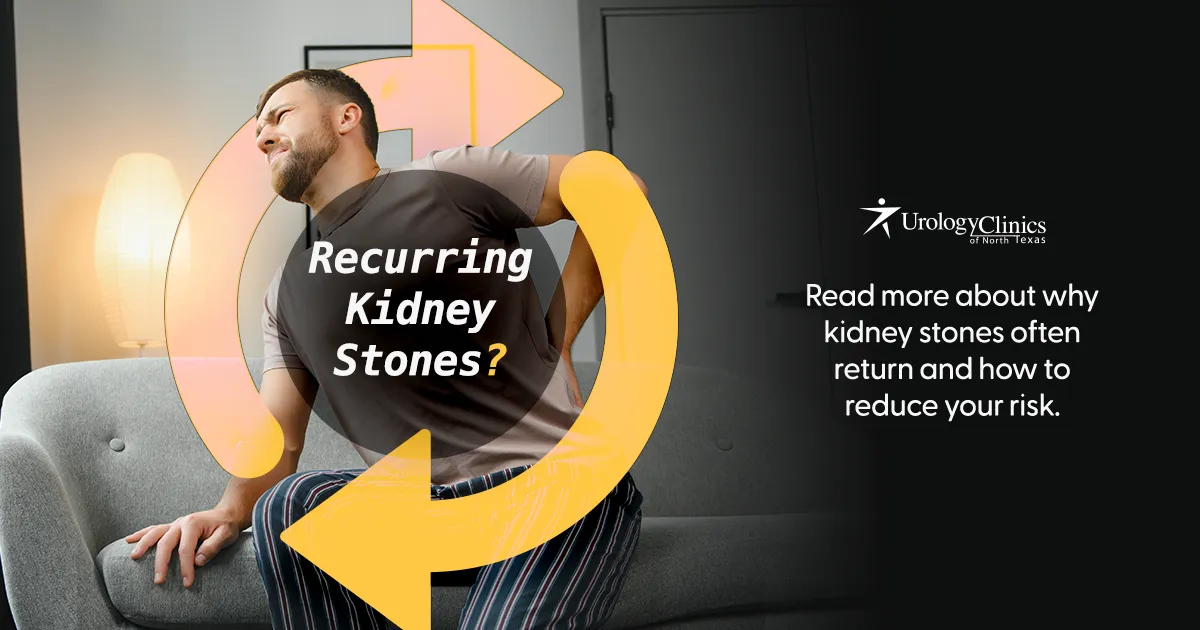
If you’ve experienced a kidney stone, you know it’s not something you want to go through twice. Unfortunately, for many people, kidney stones are more than a one-time event. In fact, without the right prevention plan, many individuals will develop another kidney stone within a few years.
The good news? Understanding why kidney stones return can help you take steps to lower your risk and protect your kidney health.
Why Do Kidney Stones Keep Coming Back?
Kidney stones develop when minerals and salts in the urine become concentrated and form crystals. While passing a stone may solve the immediate problem, it doesn’t always address the underlying cause.
Several factors can increase your chances of developing another kidney stone, including:
• Not drinking enough water
• Diets high in sodium or animal protein
• Certain medical conditions
• Family history of kidney stones
• Obesity
• Certain medications
• Recurrent urinary tract infections (for some stone types)
If these factors aren’t addressed, another stone can develop over time.
The Importance of Finding the Cause
Not all kidney stones are the same. Different types of stones develop for different reasons, which is why identifying the type of stone you’ve had is an important part of prevention.
Your urologist may recommend additional evaluation, including:
• Stone analysis (if you’ve passed or had a stone removed)
• Blood tests
• A 24-hour urine collection to evaluate mineral levels and urine chemistry
• Imaging studies when appropriate
This information helps create a prevention plan that’s tailored specifically to you.
Simple Ways to Reduce Your Risk
While every patient is different, these healthy habits may help lower your chances of another kidney stone.
Stay Well Hydrated
One of the most effective ways to help prevent kidney stones is to drink enough fluids throughout the day. Staying hydrated helps dilute your urine, making it more difficult for crystals to form.
Your urologist can help determine how much fluid is appropriate based on your health history and stone type.
Reduce Sodium Intake
Eating too much sodium can increase calcium levels in the urine, which may contribute to certain types of kidney stones.
Limiting processed foods, fast food, and heavily salted snacks can help support kidney health.
Eat a Balanced Diet
Many people assume they should avoid calcium altogether, but that’s not always the case. In fact, getting an appropriate amount of dietary calcium can actually help reduce the risk of some kidney stones.
A balanced diet rich in fruits, vegetables, whole grains, and lean proteins may be beneficial depending on your individual risk factors.
Don’t Ignore Repeat Symptoms
Pain in your side or back, blood in the urine, nausea, vomiting, or painful urination could signal another kidney stone. Seeking evaluation early may help prevent complications and allow treatment before symptoms worsen.
Schedule an Appointment with a Urologist
Passing a kidney stone doesn’t have to mean another one is inevitable. With the right evaluation, lifestyle changes, and personalized care, you may be able to significantly reduce your risk of recurrence.
If you’ve experienced kidney stones before or have concerns about your kidney health, the team at Urology Clinics of North Texas is here to help. Schedule an appointment today to discuss prevention strategies and create a plan that’s right for you.
If you are experiencing kidney stone symptoms after business hours, please submit an After Hours Stone appointment request.